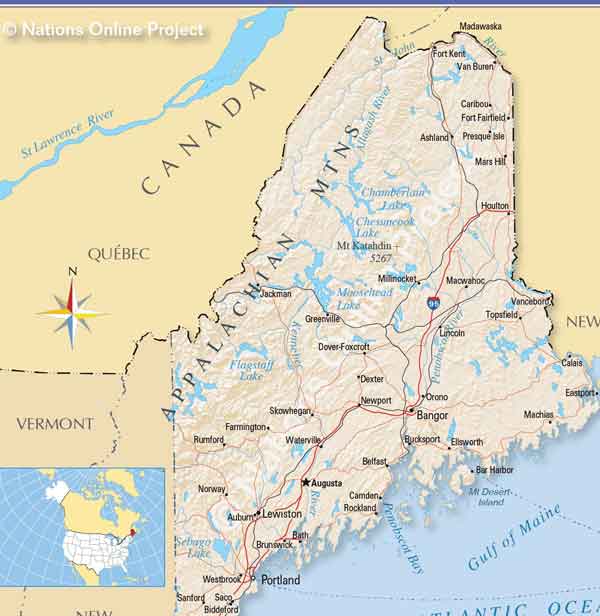
Modern real estate websites now operate inside two very different worlds.
Many large real estate agencies immediately place buyers inside MLS/IDX property searches the moment the homepage opens. Giant maps, listings, filters, waterfront searches, acreage searches, and property searches appear instantly across the screen.
That’s the portal-style real estate website experience.
And honestly, that approach clearly works.
Buyers searching for homes in Meredith NH, cabins near Moosehead Maine, lakefront property in Wolfeboro, in the New Hampshire Lakes Region; land in Aroostook County, Maine; or retirement homes on the Maine coast usually want immediate access to listings, photos, prices, acreage, and property details.
The listings are of course important. But modern Realtor websites now face another reality as well.
Learn more about our real estate website design services
Today, most listings originate from the same MLS source distributed through IDX companies. The IDX companies simply take the MLS feed and redistribute it through externally hosted search systems, maps, and property layouts that many real estate websites cannot significantly redesign themselves at the coding level.
The result is simple:
Many Realtor websites now display similar listings, images, search tools, and map systems because they are all pulling from the same MLS/IDX infrastructure.
That does not mean the websites are bad. It simply means the role of many Realtor websites has changed.
Especially for smaller agencies and local Realtor websites.
Because if buyers can already search the same MLS/IDX listings almost everywhere online, the website itself often needs to offer something more than simply throwing a giant property map directly in the visitor’s face the second the homepage loads.
That does not mean hiding the listings. Not at all. Buyers should absolutely be able to jump directly into the property search if they want to.
But many local Realtor websites are also trying to create something else before buyers fully disappear into the listings themselves:
a sense of place.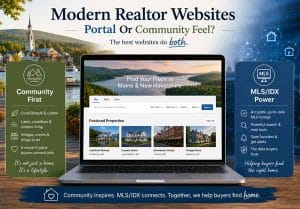
- The lakes. The coastline. The boating lifestyle.
- The slower pace.
- The small villages.
- The feeling of daily life surrounding the homes themselves.
Because real estate buyers are not always comparing identical lifestyles. Some buyers dream about a quiet lakefront property in Holderness, New Hampshire, surrounded by forests, mountains, and water.
Others may picture themselves in downtown Portland, Maine enjoying restaurants, walkable streets, and coastal city life.
Some are searching for retirement, seasonal homes, boating communities, or quieter places like Sandwich and the NH Lakes Region where the atmosphere itself becomes part of the decision.
That is exactly where community pages become valuable. Not because buyers suddenly stop caring about listings. But because community pages sometimes help buyers discover places they may never have originally considered before exploring the lifestyle surrounding them.
Especially in Maine and New Hampshire, many buyers are not simply purchasing square footage. They are often searching for an entirely different future lifestyle before they even know which property truly interests them most.
That is why community pages became so important in modern Realtor websites.
Modern real estate websites now depend on advanced IDX integration, mobile-friendly property search, local SEO structure, lead generation tools, fast page speed, community pages, user experience, and professional branding that helps buyers search for waterfront homes, lakefront properties, cabins, acreage, luxury homes, condos, townhomes, vacation properties, and seasonal real estate across Maine and New Hampshire while helping Realtors grow their business online.
The strongest real estate websites also help buyers emotionally connect with the atmosphere, lifestyle, architecture, seasonal rhythm, and personality of Maine and New Hampshire communities before they schedule a showing.
Not simply for SEO. Not simply for Google rankings. But because they create the human side surrounding the MLS/IDX search systems.
The part that says:
“You can explore the listings immediately if you want to. But we are also here to help you understand and appreciate the communities behind those listings.”
That creates a completely different design philosophy from the giant portal-style real estate websites focused almost entirely on rapid inventory access.
Neither approach is automatically wrong. They simply serve buyers differently.
Some buyers want immediate listings, maps, and rapid searches with as little interruption as possible. Others still want to understand the town, the lake, the community, the lifestyle, and the feeling of the area itself before they fully enter the property search process.
And in the modern MLS/IDX era, that difference may matter more than ever for local Realtor websites trying to create something more personal than another giant real estate portal.
Modern Realtor websites are no longer competing only through MLS visibility, IDX integration, and property listings alone.
At NH Windfall Design, we believe modern real estate websites should do more than simply display listings and property searches. They should also help buyers experience the atmosphere, lifestyle, seasonal beauty, architecture, waterfront charm, and personality of Maine and New Hampshire communities — helping people imagine the kind of life they could build there long before they ever schedule a showing.
That changed the role of many local Realtor websites completely.
Some websites still focus almost entirely on rapid MLS/IDX searches and large portal-style inventory access. Others try to create a stronger sense of community, local identity, lifestyle, and human connection surrounding the property search experience.
Especially in Maine and New Hampshire, many buyers are not simply choosing a house. They are often choosing a lake, a village, a coastline, a retirement lifestyle, or an entirely different pace of life altogether.
And sometimes, understanding the feeling of a place becomes just as important as the listing itself.
FAQ
Why do so many Realtor websites look similar today?
Many Realtor websites now use MLS/IDX systems pulling listings from the same MLS source. Because the listings, maps, and property search systems are often distributed through the same IDX companies, many real estate websites naturally end up looking structurally similar online.
What is the difference between MLS and IDX?
The MLS is the main real estate database where agents and agencies enter and manage their property listings.
The IDX is the technology bridge that takes publicly approved MLS listings and turns them into searchable property feeds, maps, and listing systems displayed on Realtor websites.
Why are community pages important for Realtor websites?
Community pages help buyers understand the lifestyle surrounding a location before they even begin focusing on individual properties. Especially in places like Maine and New Hampshire, many buyers are comparing very different lifestyles, lakes, villages, retirement areas, coastlines, and communities.
Do buyers still want immediate access to listings?
Absolutely. Many buyers want to jump directly into MLS/IDX listings immediately. But some Realtor websites also try to create a more personal connection by helping buyers explore the communities and lifestyle surrounding those listings first.
Can community pages help real estate SEO?
Yes. Community pages often help Realtor websites create stronger local SEO relevance for towns, lakes regions, villages, retirement areas, and local real estate searches connected to specific communities.