
You land on a website. Before you can read anything… a box appears.
“Hello! I’m here to help.”
Let’s call him Reginald, the overconfident virtual assistant that pops up on websites, interrupts everything, and rarely helps anyone.
Reginald Is Very Busy
Reginald:
- appears instantly
- blocks part of the screen
- asks questions nobody asked
- suggests pages you didn’t want
He is always ready. Just not useful.
You try anyway
- You ask a simple question.
- Reginald replies:
“Have you checked our FAQ page?” - You try again.
Reginald sends a generic answer that solves nothing — and often makes it worse by sending you links to articles you don’t have the time or patience to read.
Instead of going in circles, it’s often faster to get help with your website and speak to a real person
Meanwhile, You Just Wanted One Thing
You came to:
- find a phone number
- check a service
- understand pricing
- contact someone
Instead, you’re now:
👉 closing popups
👉 ignoring messages
👉 getting frustrated
This is not help. This is interruption.
And it happens on many websites. Not just with chatbots.
The Reginald Effect
It shows up as:
- popups before you even read
- banners asking you to subscribe immediately
- notifications that don’t matter
- forms that block content
- tools that create friction instead of removing it
The Problem Isn’t Technology. It’s what gets in the way.
Helpful tools are: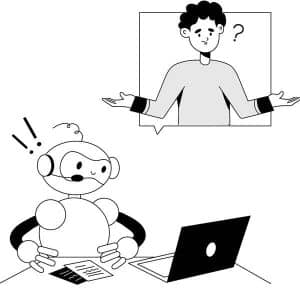
- fast
- simple
- invisible
Bad tools are:
- loud
- intrusive
- unnecessary
What Real Help Looks Like
Real help is:
- phone number easy to find
- A real human who answers the phone, without 30 minutes of automated menus asking what you need, only to send you to another recording because no one actually picks up.
- clear
- useful
- human when needed
Not something that interrupts you before you even start.
The Problem for Businesses
Adding tools like Reginald can feel like progress. But if they
- annoy visitors
- slow them down
- confuse them
They do more harm than good.
Final Thought
If your website has a Reginald, ask yourself: Is it helping your visitors… or just getting in their way? Because most people won’t complain. They’ll just leave.
Many of these problems can be solved with simple website fixes that improve the experience immediately.
To be fair, tools like this are meant to help, just not like this.
FAQ
What is a “Reginald” on a website?
A “Reginald” is any tool, chatbot, popup, or feature that interrupts visitors without actually helping them. It represents the kind of technology that looks useful but creates frustration instead.
Are chatbots always bad for websites?
No. Chatbots can be helpful when they provide clear answers, guide users properly, or connect people to real support. They become a problem when they interrupt visitors or fail to solve simple questions.
Why do popups and automated messages annoy visitors?
Because they often appear too early, block content, or ask for action before visitors have had time to understand the site. Instead of helping, they create friction.
What should a website do instead of interrupting visitors?
A good website should:
- make information easy to find
- guide visitors naturally
- provide clear contact options
- offer help when needed, not immediately
How do I know if my website has a “Reginald problem”?
Signs include:
- visitors leaving quickly
- people not completing forms
- feedback that the site feels confusing or frustrating
- too many popups, banners, or interruptions
What is better than a chatbot for small business websites?
In many cases:
- real human support
- clear navigation
- visible, easy-to-find contact information
- fast-loading pages
- simple forms
are more effective than automated tools.
Can removing unnecessary tools improve a website?
Yes. Removing or simplifying features often improves user experience, reduces frustration, and helps visitors focus on what matters.
Do modern websites need lots of features to perform well?
No. The best-performing websites are usually simple, clear, and focused. Adding too many features often creates confusion rather than value.