
In recent years, automated website builders have become increasingly popular. Platforms that promise to build a website in minutes—often using templates, drag-and-drop editors, or AI-driven setup—can be appealing to businesses that want to get online quickly with minimal effort.
For some projects, these platforms work well. But as businesses grow, many discover that what initially felt like a fast and affordable solution becomes a limitation over time.
The real challenge isn’t choosing the “best” platform. It’s choosing the right content management system (CMS) based on how a business operates today—and where it needs to go next.
What Are Automated Website Builders?
Automated website builders are all-in-one platforms designed to simplify website creation. They usually combine hosting, design tools, and content management into a single closed ecosystem.
Common examples include:
Wix
Squarespace
Shopify (primarily for e-commerce)
Webflow (a more advanced hybrid solution)
AI-driven website builders that generate layouts automatically
These platforms focus on ease of use. They reduce technical complexity and allow non-technical users to launch a website quickly, often without involving developers.
For certain use cases, this approach makes sense.
When Automated Platforms Make Sense
Automated website builders are not inherently bad. They are simply designed for specific scenarios.
They often work well for:
Very small businesses with basic needs
Temporary or promotional websites
MVPs and early-stage startups
Projects where speed matters more than flexibility
In these cases, the ability to get online quickly outweighs the need for customization or long-term scalability.
Problems tend to appear when a website becomes more than just an online presence.
The Hidden Limitations of Automated Website Builders
Limited Scalability
Most automated builders rely on predefined structures. As content grows or requirements become more complex, those structures can become restrictive.
Reduced SEO Control
While many platforms advertise built-in SEO tools, advanced optimization often requires deeper control over site structure, performance, and technical configuration.
Performance Constraints
Because these platforms operate within shared environments and fixed frameworks, performance optimization options are often limited.
Platform Lock-In
Content, design, and functionality are tightly tied to the platform itself. Migrating later can be expensive and disruptive.
Long-Term Costs
What starts as a low monthly fee can increase significantly as businesses require advanced features, integrations, or higher-tier plans.
These limitations are rarely obvious at the beginning—but they become critical once a website plays a central role in the business.
Flexible and Traditional CMS Platforms: A Different Approach
Traditional and flexible CMS platforms are built to adapt to the business, rather than forcing the business to adapt to the platform.
WordPress
WordPress is one of the most widely used CMS platforms in the world.
It is:
Open-source
Highly flexible
Supported by a large ecosystem
WordPress works especially well for:
Business websites
Content-driven platforms
SEO-focused projects
E-commerce via WooCommerce
When developed correctly, WordPress can scale far beyond what many businesses expect.
Drupal
Drupal is another open-source CMS, commonly used for complex or large-scale projects.
It’s often chosen by:
Enterprises
Government organizations
Data-heavy platforms
Drupal offers advanced control and security, but typically requires a higher level of technical expertise.
Joomla
Joomla sits between WordPress and Drupal. While less common today, it remains a viable option for certain projects that require flexibility without extensive customization.
Headless CMS Solutions
Headless CMS platforms separate content management from the website’s front end.
Examples include:
Strapi
Contentful
Sanity
These systems are ideal for modern architectures, custom applications, and multi-channel content delivery. They are powerful—but not necessary for every business.
Custom CMS Solutions
In some cases, a fully custom CMS is the best option.
Custom solutions:
Are built around specific business workflows
Avoid unnecessary features
Provide maximum flexibility
They require a higher initial investment but can deliver long-term efficiency and scalability.
The Real Question Isn’t “Which CMS Is Best?”
The most common mistake businesses make is choosing a platform based on popularity or trends instead of real needs.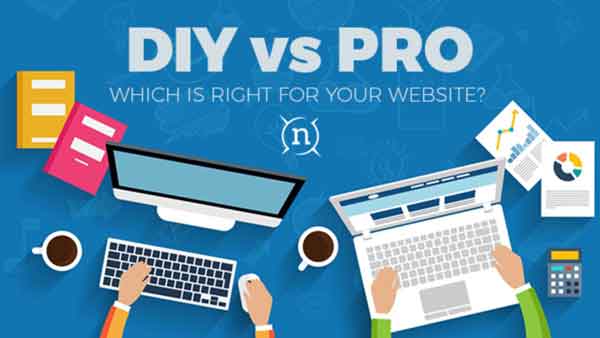
The right CMS depends on:
Business goals
Growth plans
Budget and internal resources
Content strategy
Marketing and integration requirements
There is no universal “best CMS.”
There is only the right CMS for a specific business at a specific stage.
This is where experience and guidance matter more than tools.
Why CMS Choice Has a Direct Impact on Business Growth
A website is not just a digital brochure. For many businesses, it is a sales engine, a marketing platform, and a core operational asset.
Choosing the wrong CMS can:
Limit marketing effectiveness
Reduce organic visibility
Increase long-term costs
Slow down growth
Choosing the right CMS creates a foundation that supports expansion instead of holding it back.
How We Help Businesses Choose the Right CMS
At NH Windfall Design, we don’t start with a platform—we start with understanding the business.
We help companies evaluate:
What their website needs to do today
What it will need to support in the future
Which CMS aligns realistically with those goals
Sometimes the right solution is WordPress.
Sometimes it’s a headless CMS.
Sometimes it’s a custom-built platform.
The key is that the decision is driven by strategy, not convenience.
Learn more about our approach at NH Windfall Design.
Our Experience: Strong Local Roots, National and Global Reach
While NH Windfall Design has built a solid foundation working with businesses in the New Hampshire area, our experience extends far beyond a single region.
Our work in New Hampshire has shaped a practical, business-first approach—one that emphasizes clarity, performance, and long-term value. Those same principles apply whether a project serves a local market, a national audience across the United States, or customers worldwide.
We are structured to support projects remotely, collaborating with teams and stakeholders regardless of location. This allows us to guide businesses in choosing the right CMS and building scalable digital platforms wherever they operate.
By combining strong local experience with the ability to manage national and international projects, we help businesses make informed technology decisions without being limited by geography.
Avoiding Costly CMS Decisions Early
Many businesses seek help only after hitting the limitations of an automated platform. At that stage, switching systems can be costly and disruptive.
Making the right CMS decision early can:
Save time and money
Reduce technical debt
Prevent future rebuilds
Support sustainable growth
The earlier strategy and technology align, the better the long-term outcome.
Tools Don’t Build Businesses, Decisions Do!
Automated website builders have their place. Traditional CMS platforms have their place. Custom solutions have their place.
The difference between a website that simply exists and one that supports growth often comes down to choosing the right foundation.
When businesses stop asking “Which platform is easiest?” and start asking “Which platform supports where we’re going?”, the conversation—and the results—change.
Frequently Asked Questions About CMS Platforms
Are automated website builders bad for SEO?
Not necessarily. They can support basic SEO needs, but they often lack the flexibility required for advanced optimization and long-term organic growth.
Is WordPress the best CMS for every business?
No. WordPress is highly flexible, but it isn’t the right solution for every project. The best CMS depends on the business model and goals.
Can a business start with an automated platform and switch later?
Yes, but migrations can be complex and expensive. Planning ahead usually reduces future disruption.
What is a headless CMS and who is it for?
A headless CMS separates content from presentation. It’s ideal for custom applications, modern web architectures, and multi-channel publishing.
How do I know which CMS is right for my business?
The right CMS aligns with your goals, growth plans, and operational needs. Getting experienced guidance early helps avoid costly mistakes.
Do you work with businesses outside your local area?
Yes. While we have strong roots in New Hampshire, we work with businesses across the United States and internationally, supporting projects regardless of location.